いま、一枚の紙幣を手に取ってほしい。それは綿と麻でできた紙きれにすぎない。食べることも、着ることも、住むこともできない。それなのに、なぜこの紙きれは食料や家や教育と交換できるのか。連邦準備制度の物語は、この素朴な問いから始まる。 Pick up a banknote. It is a slip of cotton and linen — you cannot eat it, wear it, or live in it. And yet it can be exchanged for food, a home, an education. The story of the Federal Reserve begins with that simple question: why?
答えは、拍子抜けするほど単純だ。「他の人がそれを価値あるものと信じているから」である。お金とは、その核心において、社会が自らに語り聞かせる一つの物語――共有された約束事にすぎない。一ドルが一ドルの価値を持つと皆が信じているあいだは、それは一ドルである。だが、その信頼が崩れた瞬間――一九二〇年代のワイマール・ドイツ、二〇〇〇年代のジンバブエ、近年のベネズエラのように――お金は一夜にして、ただの紙くずへと変わる。 The answer is almost absurdly simple: because other people believe it has value. Money, at its core, is a shared fiction — a story a society agrees to tell itself. As long as everyone believes a dollar is worth a dollar, it is. The moment that belief collapses — as in Weimar Germany in the 1920s, Zimbabwe in the 2000s, or Venezuela more recently — money becomes worthless paper almost overnight.
これは不穏な事実に聞こえるかもしれない。お金がただの物語なら、金融システムとは壮大な幻想なのだろうか。そうではない。だがそれは、金融が「信頼」の上に築かれていること、そしてお金についての物語を支配する者が、計り知れない力を握ることを意味する。その力こそが、本連載を貫く主題である。まずは、お金がどこから来たのかを辿ることから始めよう。 This may sound unsettling. If money is just a story, is finance an elaborate illusion? Not quite. But it does mean the system is built on trust — and that whoever controls the narrative about money wields enormous power. That power is the theme running through this series. We begin by asking where money came from.
物々交換という壁The Wall of Barter
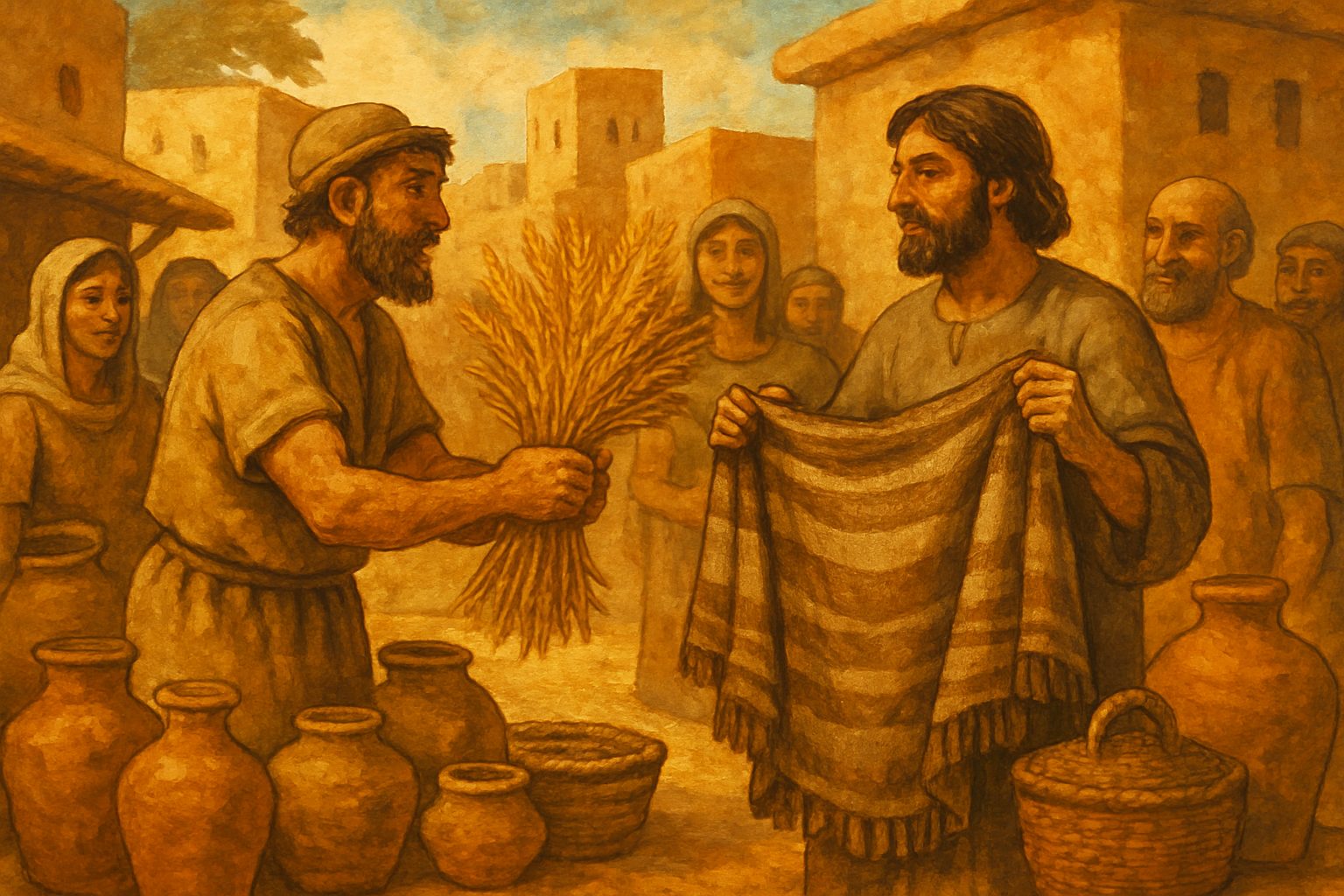
五千年前、メソポタミアの農夫を想像してみよう。彼は食べきれないほどの小麦を持っている。冬が近い。暖かい外套が欲しい。隣の機織りは見事な外套を作る。ならば小麦と外套を交換すればよい――これが物々交換、最も古い商取引の形だ。だが、ここに問題がある。機織りはいま小麦を必要としていない。彼が欲しいのは新しい鋤だ。そこで農夫は鋤を持つ者を探すが、その鋤職人は屋根の修理人を求めている……。 Picture a farmer in Mesopotamia 5,000 years ago. He has more wheat than he can eat, and winter is coming; he wants a warm cloak. His neighbor the weaver makes fine cloaks — so they trade. This is barter, the oldest form of commerce. But there is a catch: the weaver does not need wheat. He needs a plow. So the farmer hunts for a plow-maker, who in turn needs his roof repaired…
経済学者はこれを「欲求の二重の一致」問題と呼ぶ。物々交換が成立するには、二人が互いの欲しいものを、同じ時に、釣り合う量で持っていなければならない。小さな共同体ならそれでも回る。だが社会が大きくなり、取引が複雑になるほど、この条件は経済活動を縛る重い足かせとなる。古代の世界は、より優れた仕組みを必要としていた。そして、それを見つけた。 Economists call this the "double coincidence of wants." For barter to work, two people must each have exactly what the other wants, at the same time, in compatible quantities. In small communities this can work — but as societies grow and trade grows complex, it becomes a severe obstacle. The ancient world needed something better. And it found it.
最初の「お金」The First Money
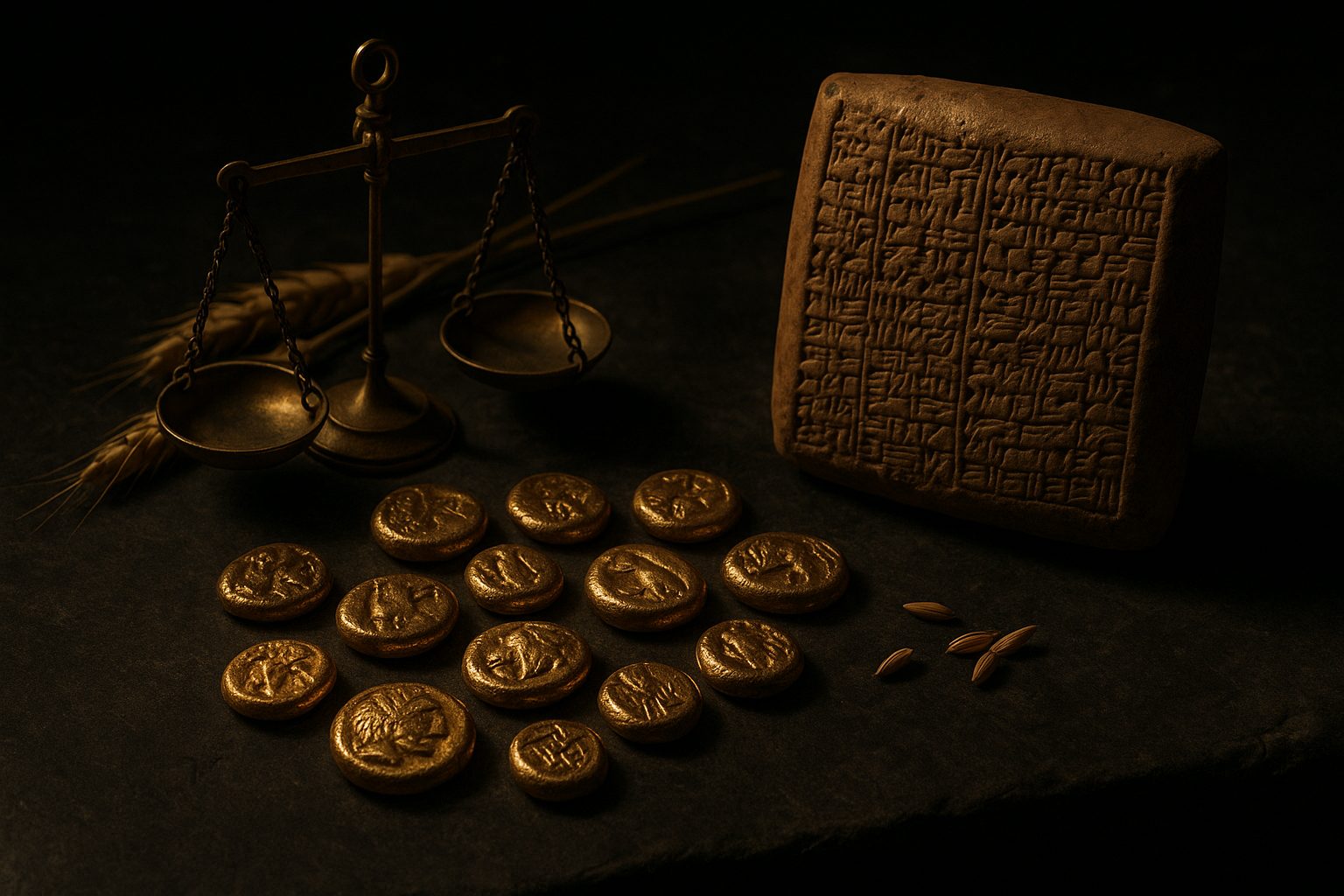
最初期のお金は、それ自体に価値を持ちながら、広く交換に受け入れられる「商品」だった。文化ごとに異なる――中国やアフリカの貝殻、メソアメリカのカカオ豆、ローマ世界の塩(「給料 salary」はラテン語の塩 salarium に由来する)、牧畜社会の家畜。では、何が「良い」商品貨幣を決めたのか。歴史家と経済学者は、五つの性質を挙げる。耐久性、分割性、携帯性、そして価値を保つだけの希少性、最後に最も重要な、誰もが受け入れるという受容性である。 The earliest money was a commodity — something with intrinsic value that was also widely accepted in trade. Cultures used different ones: cowrie shells in China and Africa, cacao beans in Mesoamerica, salt in Rome (the word "salary" comes from the Latin salarium), cattle among herders. What made a good commodity money? Five properties: durability, divisibility, portability, scarcity enough to hold value, and — most important — wide acceptability.
貴金属、とりわけ金と銀は、これらの条件を驚くほどよく満たした。錆びず、腐らず、溶かして自在に分けられ、小さな塊に十分な価値を宿す。希少だが、まったく手に入らないほどではない。そして誰もがその美しさと希少性を認めた。紀元前七〇〇年ごろ、リュディア王国(現在のトルコ西部)が世界初の規格化された硬貨――重さと純度を公印で保証したエレクトロン貨――を鋳造する。その発想は瞬く間に広がり、二世紀のうちにギリシャ、ペルシャ、インド、中国で硬貨が打たれた。 Precious metals — gold and silver above all — met these tests beautifully. They do not rust or rot, can be melted and divided, and pack real value into a small package. They are scarce but not impossibly so, and everyone recognized their beauty. Around 700 BCE the kingdom of Lydia (in today's western Turkey) struck the first standardized coins — electrum stamped to guarantee weight and purity. The idea spread fast; within two centuries coins were minted across Greece, Persia, India, and China.
商品貨幣の限界The Limits of Commodity Money
商品貨幣は二千五百年にわたり人類の商取引を支配した。だが、それ自身の問題も抱えていた。最も明白なのは、金銀が「重い」ことだ。大きな取引をする商人は、数十ポンドにもなる硬貨の袋を運ばねばならない。不便で、危険で(盗賊はこの仕組みを愛した)、費用もかさんだ。 Commodity money ruled commerce for two and a half millennia — but it had problems of its own. The most obvious: gold and silver are heavy. A merchant closing a large deal might haul sacks of coin weighing dozens of pounds. It was inconvenient, dangerous (bandits loved the arrangement), and costly.
さらに深刻な問題があった。金銀の供給が、経済の必要量と噛み合うとは限らないのだ。経済が成長すれば――生産が増え、取引が活発になれば――それを支えるより多くのお金が要る。だが金銀の供給は、地中からどれだけ掘り出せるかに左右される。採掘は遅く、高価で、当てにならない。結果として周期的に硬貨が不足し、それが経済成長の首を絞めた。逆に、十六世紀のスペインによるアステカ・インカの財宝略奪のように、突然の大量流入は物価を押し上げ、インフレを生んだ。世界は、より柔軟な仕組みを必要としていた。 A deeper problem: the supply of gold and silver need not match what the economy requires. A growing economy needs more money to move all those goods — but metal supply depends on how much can be mined, and mining is slow, costly, and uncertain. The result was periodic coin shortages that strangled growth. Conversely, a sudden flood — like Spain's plunder of Aztec and Inca treasure in the 1500s — drove prices up into inflation. The world needed something more flexible.
信用の発明The Invention of Credit
硬貨より、いや商品貨幣よりも前から、人類は「信用」を使っていた。現存する最古の文字記録――紀元前三〇〇〇年ごろのメソポタミアの粘土板――は、詩でも歴史でもない。それは領収書であり、貸借の記録だ。古代ウルの商人たちは神殿から穀物を借り、収穫後に利息を付けて返すと約束していた。 Long before coins — even before commodity money — humans used credit. The oldest written records we have, Mesopotamian clay tablets from around 3000 BCE, are not poetry or history. They are receipts and loan records. Merchants in ancient Ur borrowed grain from temples, promising to repay with interest after the harvest.
信用の本質はここにある。誰かがあなたを信頼すれば――あるいは、払えなければ差し押さえられる資産があなたにあれば――その人は今日、前もって購買力を貸してくれる。この信頼に基づく仕組みは、物理的な商品のやり取りよりはるかに自由に経済を動かした。だが大規模な信用には記録が要り、記録には制度が要る。古代メソポタミアの神殿と宮殿こそ、世界最初の「銀行」だった。穀物と銀を預かり、商人に貸し付け、精緻な会計で追跡した。 That is the essence of credit: if someone trusts you — or holds assets they could claim if you default — they can extend you purchasing power today, in advance. This trust-based system let the economy flow far more freely than the swapping of physical goods. But credit at scale demands record-keeping, and record-keeping demands institutions. The temples and palaces of ancient Mesopotamia were the world's first banks — taking in grain and silver, lending to merchants, tracking it all through elaborate accounting.
ローマには洗練された銀行業があった。中世イタリアの都市国家――フィレンツェ、ヴェネツィア、ジェノヴァ――は、為替手形、信用状、複式簿記といったさらに複雑な金融の道具を生み出した。十四世紀から十六世紀にかけ、メディチ家はヨーロッパ各地に支店を持つ事実上の国際銀行網を築いた。 Rome had sophisticated banking. The medieval Italian city-states — Florence, Venice, Genoa — developed still more complex instruments: bills of exchange, letters of credit, double-entry bookkeeping. From the 14th to the 16th centuries, the Medici ran what was effectively an international banking network with branches across Europe.
①お金は「価値がある」と皆が信じることで成り立つ共有の物語である。②物々交換の限界が商品貨幣を生み、金銀が五つの条件を満たして勝ち残った。③金銀すら不足や重量に悩まされ、人類はより古く、より柔軟な「信用」へと回帰した。金融とは、突き詰めれば信頼を記録し、管理する技術である。(1) Money is a shared story that works only while everyone believes in it. (2) The limits of barter produced commodity money; gold and silver won by meeting all five tests. (3) Even metal suffered from shortage and weight, so humanity returned to something older and more flexible — credit. Finance, in the end, is the art of recording and managing trust.
これほどの洗練を見せながら、これらの制度はまだ、銀行業における最も強力で、最も隠された革新には辿り着いていなかった。その発見は、十七世紀イングランドの、最もありそうにない場所――金細工師の店先――で生まれることになる。それは初め、ひそやかな秘密として守られた。そしてやがて、今日の世界のあらゆる銀行と、あらゆるドル札の土台となる。次回――「ロンドンの金細工師」。お金が、無から生み出される瞬間の物語である。 For all their sophistication, none of these institutions had yet stumbled on banking's most powerful — and most hidden — innovation. That discovery would come in 17th-century England, in the unlikeliest of places: a goldsmith's shop. At first it was kept as a quiet secret. In time it became the foundation of every bank, and every dollar, in the world. Next time — "The Goldsmiths of London": the story of the moment money is conjured out of nothing.